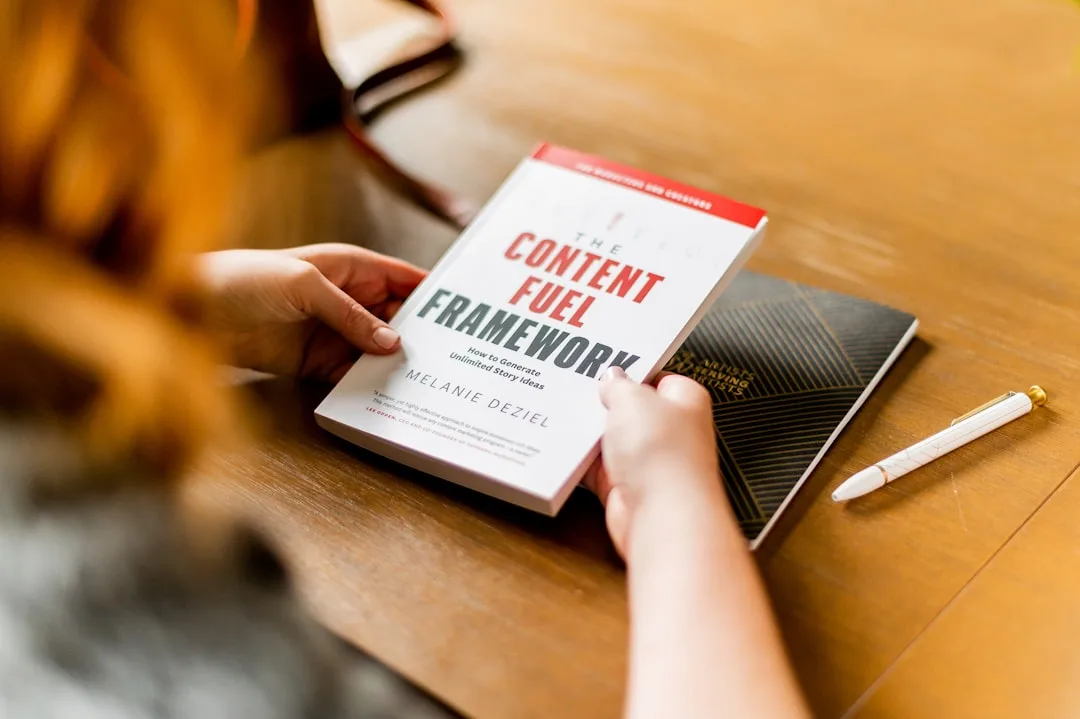
The format an author chooses for a digital book is not a technicality. It is the layer that sits between the manuscript and every reader who will ever encounter it. The wrong format hides accessibility features, breaks on certain devices, costs royalty points, or simply prevents the book from being sold on a major retailer. The right format reaches more readers, earns more revenue, and survives the next decade of device churn.
This guide covers what modern ebook formats actually are, why EPUB 3 has won the prose category, where PDF and KF8 still earn their keep, and the metadata, accessibility, and distribution decisions that make the difference between a book that sells and a book that sits in a back catalogue.
What Counts as a Modern Ebook Format
The current landscape narrows to four formats that matter.
| Format | Standard Body | Best For | Notable Devices |
|---|---|---|---|
| EPUB 3.3 | W3C, formerly IDPF | Reflowable prose, fiction, non-fiction | Apple Books, Kobo, Google Play Books, Tolino, Adobe Digital Editions |
| KF8 / KFX | Amazon proprietary | Kindle distribution | All Kindle devices and apps |
| Accessible PDF (PDF/UA) | ISO 14289 | Fixed-layout works, technical reference, cookbooks | Universal, but cumbersome on small screens |
| Audiobook M4B | Apple, ID3 metadata | Audio editions | Audible, Apple Books, Libro.fm |
Why EPUB 3 Won the Prose Category
EPUB 3 is, fundamentally, a website in a zip file. It packages XHTML5, CSS, fonts, images, and an OPF manifest into a single archive. Reading systems unzip it, render the HTML with a constrained CSS engine, and present pages that flow around the user's screen and chosen type size. This separation of content and presentation is what makes accessibility features (text-to-speech, dynamic type, dyslexia-friendly fonts, dark mode) possible without author intervention.
"Reflowable text is not a convenience feature. It is the only way digital reading respects the body, the eye, and the situation of the person reading. A book that does not reflow is not a digital book. It is a screen-shot of a paper book." Liz Castro, author of EPUB Straight to the Point
The OPF (Open Packaging Format) file declares the reading order, navigation, manifest of resources, and metadata. The minimum structure is small enough to write by hand, which is why senior editorial teams often prefer hand-tuned EPUBs to exported ones.
<?xml version="1.0" encoding="UTF-8"?>
<package xmlns="http://www.idpf.org/2007/opf" version="3.0" unique-identifier="bookid">
  <metadata xmlns:dc="http://purl.org/dc/elements/1.1/">
    <dc:identifier id="bookid">urn:isbn:9780000000000</dc:identifier>
    <dc:title>The Quiet Function</dc:title>
    <dc:creator>Marin Holt</dc:creator>
    <dc:language>en</dc:language>
    <dc:date>2026-04-01</dc:date>
    <meta property="dcterms:modified">2026-04-01T09:00:00Z</meta>
  </metadata>
  <manifest>
    <item id="cover" href="cover.xhtml" media-type="application/xhtml+xml"/>
    <item id="ch01" href="ch01.xhtml" media-type="application/xhtml+xml"/>
    <item id="css" href="styles.css" media-type="text/css"/>
    <item id="nav" href="nav.xhtml" media-type="application/xhtml+xml" properties="nav"/>
  </manifest>
  <spine>
    <itemref idref="cover"/>
    <itemref idref="ch01"/>
  </spine>
</package>
This minimum already supports reflow, navigation, search, and accessibility. Everything else (fonts, images, scripted content) layers on top.
What Reflow Means for Author Income
Reflowable formats reach more readers, and more readers means more royalties. Apple Books, Kobo, Google Play Books, Barnes and Noble, Tolino, Storytel, and dozens of regional retailers accept EPUB 3 directly. Amazon converts uploaded EPUB 3 into KF8 internally. A single source file can earn revenue across every English-language retailer and most non-English ones, with translations layered on top.
PDF, by contrast, is essentially restricted to direct sales, Amazon's lower 35 percent royalty tier, and a handful of niche retailers. An author who ships PDF-only forfeits half their royalty and most of their potential audience.
"The single decision that costs new authors the most money is uploading PDFs to retailers that prefer EPUB. Amazon's algorithm penalises print-replica files in search, and Apple Books does not stock them at all. Format choice is a revenue choice." Jane Friedman, publishing analyst and editor of The Hot Sheet
For technical authors writing material that genuinely cannot reflow (programming books with long code listings, sheet music, mathematical typography), the modern path is a hybrid: ship EPUB 3 with carefully chosen breakpoints and a downloadable PDF companion for readers who prefer the fixed layout.
Accessibility as a First-Class Feature
EPUB 3 inherited the accessibility work of HTML5 and added publishing-specific affordances: structured navigation, semantic landmarks for cover and table of contents, page-list mapping for citation parity with print, and explicit hooks for text-to-speech engines.
The W3C's EPUB Accessibility 1.1 specification defines conformance levels A, AA, and AAA mirroring WCAG. Conformance gates eligibility for institutional sales (libraries, schools, government procurement) and qualifies titles for organisations such as Bookshare, the Royal National Institute of Blind People, and the European Accessibility Act compliance regime that takes full effect in 2025.
The minimum accessible EPUB does five things.
| Practice | Why It Matters |
|---|---|
| Semantic HTML5 (h1-h6, nav, section, aside) | Screen readers announce structure, users skim by heading |
| Alt text on every meaningful image | Visual content reaches blind and low-vision readers |
| Decorative image marked with empty alt | Assistive tech skips chrome and ornamentation |
| Language declared at html and inline level | Speech engines pronounce code-switches correctly |
| Logical reading order in spine and content | Linear narration matches visual layout |
"Accessibility is not a separate ebook. It is the same ebook, made well. Every accessibility feature also helps a reader on a phone in bright sunlight or a commuter listening on a train." George Kerscher, DAISY Consortium
The Kindle Question
Amazon's distribution share in many markets sits between 50 and 80 percent, which makes Kindle compatibility non-negotiable for most authors. The good news: the answer is straightforward.
Upload EPUB 3 to Kindle Direct Publishing. Amazon converts it into KF8 (Kindle Format 8) and KFX automatically. The legacy .mobi format is no longer accepted for new uploads since August 2022. Authors who maintain Calibre conversion pipelines targeting .mobi can stop.
Kindle's CSS subset is narrower than open EPUB readers. A small set of practical rules avoids the common rendering surprises.
@page { margin: 0; }
body { line-height: 1.4; }
h1 { page-break-before: always; }
img { max-width: 100%; height: auto; }
.dropcap { float: left; font-size: 3em; line-height: 1; padding-right: 0.1em; }
Avoid CSS Grid, Flexbox, and complex transforms. Older Kindle e-ink devices fall back to a much smaller subset and may render advanced layouts as plain prose. Test on a Kindle Paperwhite before locking the design.
Fixed-Layout Books and the PDF/UA Path
Some books cannot reflow. Cookbooks where the recipe sits next to the photo, picture books, comics, sheet music, and many art-history titles need fixed-layout treatment.
EPUB 3 supports fixed-layout pages via metadata flags and per-page geometry. Apple Books renders them well. Kindle has its own Kindle Comic Creator and Kindle Textbook Creator that emit KF8 fixed-layout files. PDF/UA (ISO 14289) remains a respectable choice for fixed-layout reference material, especially when distribution goes through education or library channels.
The trade-off is real. Fixed-layout files do not adapt to small screens. Readers on phones zoom and pan. Type cannot rescale. Dark mode and dyslexia-friendly fonts do nothing. For visual books that is an acceptable cost. For prose, it is a mistake.
Metadata and Discoverability
Retailers rank books in search by relevance signals derived from metadata. Sparse metadata buries a book even when the writing is excellent.
Minimum metadata for a competitive listing.
| Field | Notes |
|---|---|
| Title and subtitle | Subtitle should include genre or topic keywords readers actually search |
| Author and contributor roles | Use MARC relator codes (aut, ill, edt, trl) when supported |
| ISBN or ASIN | Required for paid distribution on most retailers |
| Language (BCP 47) | en, en-GB, fr-CA, ja, etc. |
| Publication date | ISO 8601 |
| Publisher | Imprint name, even for self-published |
| BISAC subject codes | Two or three primary categories |
| Keywords | Seven for KDP, varies elsewhere |
| Series and series position | When applicable |
| Audience | Adult, young adult, juvenile, professional |
| Description | First 300 characters carry the most weight |
Royalty Tiers and Pricing Bands
Format and price interact in ways many first-time authors do not realise. Amazon's 70 percent royalty tier requires the book to sit between USD 2.99 and 9.99, be enrolled in territorial rights covering specified markets, and be available in EPUB or KF8. PDF books fall to 35 percent automatically. Books priced under 2.99 or over 9.99 also fall to 35 percent. The same applies on Apple Books, Kobo, and Google Play Books with slight variations.
| Retailer | Tier | Conditions |
|---|---|---|
| Amazon KDP | 70 percent | Reflowable EPUB or KF8, 2.99 to 9.99 USD, territorial rights |
| Amazon KDP | 35 percent | Outside band, PDF, print replica |
| Apple Books | 70 percent | EPUB 3, retail price set in store currency |
| Kobo | 70 percent | Files priced 1.99 USD or above, lower under that |
| Google Play Books | 70 percent | EPUB or PDF, retailer applies discount, royalty calculated on list price |
| Smashwords / Draft2Digital | Aggregator | Distributes to multiple retailers, takes a small platform cut |
DRM, Watermarking, and Reader Trust
Hard DRM (Adobe ADEPT, Amazon Kindle DRM, Apple FairPlay) prevents most file sharing but blocks legitimate uses. Readers cannot send a DRM file to a non-Kindle device, cannot use third-party text-to-speech, and lose access if the platform ever shuts down.
Social DRM, where the reader's name and order ID are embedded in a watermark, deters casual sharing without breaking accessibility tools. Most independent authors choose social DRM or skip protection entirely. Studies of music piracy and Tor Books's experiment with DRM-free sales suggest that hard DRM has marginal effect on revenue while annoying paying customers.
"DRM is a tax on honest readers. The pirates strip it in seconds. The legitimate buyer is the one who cannot lend a book to a friend or read it on the device they prefer." Cory Doctorow
The decision is also a value statement. Authors who care about long reader relationships often skip hard DRM. The cognitive-load research summarised at What's Your IQ underscores why friction in reading apps damages comprehension and recall, which damages word-of-mouth, which damages sales.
Production Toolchain
A practical author toolchain has three layers.
Authoring: Markdown or Word with a consistent style template. Pandoc converts Markdown to a clean EPUB with minimal fuss. Vellum (Mac) and Atticus (cross-platform) produce polished EPUB and print PDF from a single source.
Validation: epubcheck for technical conformance, Ace by DAISY for accessibility, Amazon's Kindle Previewer for KF8 rendering. All three are free.
Distribution: KDP for Kindle, Apple Books Connect for Apple, direct accounts on Kobo and Google Play, or aggregators like Draft2Digital and PublishDrive for the long tail. Authors selling direct from their own store typically use Payhip, Gumroad, or BookFunnel for delivery.
The productivity rhythms documented at When Notes Fly help authors maintain the discipline of monthly metadata reviews and quarterly retailer audits, both of which compound into noticeably better discoverability over time.
Future-Proofing the Manuscript
Format trends to watch.
Web-first reading. Reader habits increasingly start in browsers and reading apps. EPUB 3's HTML lineage makes it the natural source for adaptive web editions.
AI narration. Apple, Google, and Audible all support automatic narration generated from EPUB source. Quality has crossed the threshold where second-tier audiobooks no longer require human voice talent. Reserve human narration for prose that benefits from it (literary fiction, memoir).
Internationalisation. Translation rights are a growing share of digital revenue. EPUBs with clean structure and well-tagged metadata translate cleanly. Files held together with hand-coded inline styles often need a near-rebuild for each language.
Accessibility regulation. The European Accessibility Act applies to ebooks sold in the EU from 28 June 2025. Non-conformant titles face delisting in some retailer channels. Build accessible from the start.
The authors who treat format as a craft, not a postscript, ship books that find more readers, last longer in catalogue, and survive the next platform shift. The mechanics are knowable and the tools are free.
Cover Design and Format-Specific Considerations
The cover travels through more pipelines than any other ebook asset. It appears as a thumbnail in retailer search, a full-resolution image inside the EPUB's first spine item, a landscape banner on Apple Books, and a square thumbnail on social shares. Each surface has its own dimensions and compression expectations.
Amazon recommends 2560 by 1600 pixels for the master cover, JPEG at 100 quality, sRGB colour space. Apple Books accepts the same. The same file scales down for thumbnails and avoids the visible artifacts that come from upscaling smaller covers. Storing the cover as PNG works but produces files three to five times the size with no perceptible quality gain.
Inside the EPUB itself, the cover is referenced from the OPF manifest with the cover-image property and from the spine as the first item. Modern reading systems also benefit from a separate landscape banner image registered in the metadata for retailer thumbnail rendering. Authors who provide both the portrait cover and a landscape banner outperform single-cover competitors in retailer search visibility.
Series authors should treat cover design as a system, not as one-off art. A consistent typographic treatment, a consistent palette, and a consistent compositional anchor (a recurring object, silhouette, or texture) signal series membership at thumbnail size where individual artwork details are illegible.
Long-Form Reader Engagement
Modern reading systems track engagement metrics that authors and publishers can read back through retailer dashboards. Apple Books shares aggregate completion rate. Amazon Kindle reports KENPC (Kindle Edition Normalized Pages) read for Kindle Unlimited titles, which serves as a proxy for engagement. Kobo and Tolino offer their own analytics through publisher portals.
The signal authors should watch is completion rate. A book whose readers finish at 80 percent or above earns word-of-mouth recommendations and series follow-through. A book that drops to 30 percent completion by the third chapter loses ranking momentum even if early sales were strong.
Format choices that improve completion: clean reflowable EPUB rather than awkward fixed-layout PDF for prose, generous default line spacing, a chapter-end navigation cue (a clear next-chapter link works better than relying on the reader to swipe), and well-tagged tables of contents that let readers orient themselves throughout the read.
References
- World Wide Web Consortium. (2023). EPUB 3.3 Specification. https://www.w3.org/TR/epub-33/
- World Wide Web Consortium. (2023). EPUB Accessibility 1.1. https://www.w3.org/TR/epub-a11y-11/
- International Organization for Standardization. (2014). PDF/UA-1 (ISO 14289-1:2014). https://www.iso.org/standard/64599.html
- Amazon. (2024). Kindle Publishing Guidelines. https://kdp.amazon.com/en_US/help/topic/G200634390
- DAISY Consortium. (2024). Ace by DAISY Documentation. https://daisy.github.io/ace/
- European Union. (2019). Directive 2019/882 on accessibility requirements (European Accessibility Act). https://eur-lex.europa.eu/eli/dir/2019/882/oj
- Friedman, J. (2023). The Business of Being a Writer. University of Chicago Press. https://www.janefriedman.com/business-of-being-a-writer/
- Doctorow, C. (2014). Information Doesn't Want to Be Free. McSweeney's. https://craphound.com/information/
- Castro, L. (2011). EPUB Straight to the Point. Peachpit Press. https://www.peachpit.com/store/epub-straight-to-the-point-creating-ebooks-for-the-9780132366441
Frequently Asked Questions
What Counts as a Modern Ebook Format?
The current landscape narrows to four formats that matter.
Why EPUB 3 Won the Prose Category?
EPUB 3 is, fundamentally, a website in a zip file. It packages XHTML5, CSS, fonts, images, and an OPF manifest into a single archive. Reading systems unzip it, render the HTML with a constrained CSS engine, and present pages that flow around the user's screen and chosen type size. This separation of content and presentation is what makes accessibility features (text-to-speech, dynamic type, dyslexia-friendly fonts, dark mode) possible without author intervention.
What Reflow Means for Author Income?
Reflowable formats reach more readers, and more readers means more royalties. Apple Books, Kobo, Google Play Books, Barnes and Noble, Tolino, Storytel, and dozens of regional retailers accept EPUB 3 directly. Amazon converts uploaded EPUB 3 into KF8 internally. A single source file can earn revenue across every English-language retailer and most non-English ones, with translations layered on top.
Related Articles

Ready to Convert Your Files?
Use our free online file converter supporting 240+ formats. No signup required, fast processing, and secure handling of your files.
Convert Files